
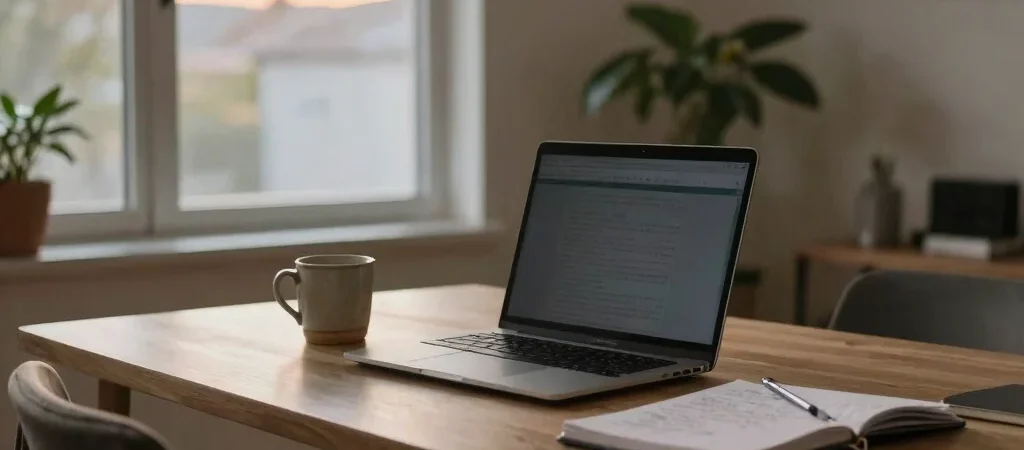
It’s 6:10 p.m., the laptop is shut, and your mind is still drafting a reply to an email. The transition from work to home can feel blurry, especially when your desk is also part of your living space. A brief closing routine gives the day an ending you can see and repeat.
Close the open loops
Before you log off, take a few minutes to write down the next step for anything you’re carrying into tomorrow. “Review the draft at 9” is easier to return to than a vague reminder to keep thinking about it. Then close the tabs you don’t need and leave your workspace in a state that feels manageable.
This isn’t a promise to finish every task before the day ends. It’s a way to give unfinished work a place to wait, rather than asking your memory to hold it all through dinner.
Use a physical transition
Choose one small action that signals the shift: put the laptop in a drawer, change out of work clothes, or step outside for a few minutes. If you work at the kitchen table, clearing your mug and notebook can help the room feel like a shared space again. Keep the action simple enough to do even on a packed day.
Try the same sequence for several evenings, then adjust the part that feels awkward. Maybe a short walk is easier than stretching, or a written tomorrow list is more useful than a tidy desk. The aim is not to create a perfect boundary; it’s to make one small cue for being off the clock.